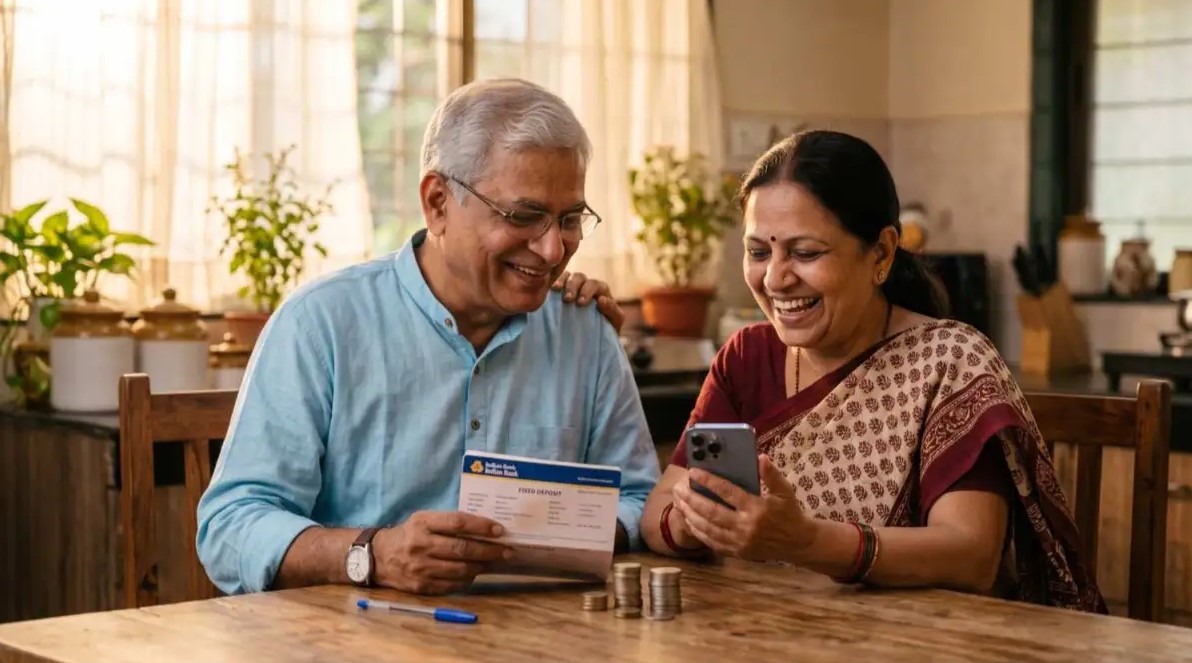
For someone who has retired, a fixed deposit is far more than an investment; it’s a source of security. After decades of earning, the goal changes. You’re no longer chasing the highest possible return; you’re protecting what you’ve built and turning it into steady, dependable income. An FD does precisely that. It guarantees your principal, holds its rate no matter what the market does, and pays out regular interest that can top up a pension or cover the monthly bills. For senior citizens, it stays one of the most trusted instruments there is.
That said, not every FD is the same, and in 2026 the choice carries more weight than usual. Rates have shifted, different tenures come with different slabs, and the safety of the institution you hand your money to simply cannot be compromised when it’s your retirement corpus on the table. Picking the best FD comes down to getting three things right together: the rate you earn, the tenure that suits your income needs, and the safety rating that guards your money. Here’s how to do exactly that.
Why Senior Citizens Get a Better Deal on FDs?
The biggest edge a senior citizen holds with fixed deposits is the extra interest rate benefit. Most banks and NBFCs pay depositors aged 60 and above a higher rate than regular investors, usually an additional 0.25% to 0.50% per annum on the same deposit.
That premium exists because senior citizens are valued depositors, and over time the extra rate lifts retirement income in a way that genuinely matters. Bajaj Finance, for instance, gives senior citizens an additional rate benefit of up to 0.35% p.a. over the prevailing rate. Held on a large deposit across several years, that gap compounds into a meaningful addition to your returns, money flowing straight into your monthly income or your corpus.
For any senior citizen comparing FDs, this senior-specific rate is the first box to tick. The higher the rate, the harder your fixed income works.
Bajaj Finance FD Rates for Senior Citizens in 2026
As of September 2026, Bajaj Finance pays senior citizens fixed deposit interest of up to 7.75% p.a., against up to 7.40% p.a. for regular investors under 60. Those rates apply to deposits from Rs. 15,000 to Rs. 3 crore, across tenures of 12 to 60 months.
The rate shifts with tenure and payout frequency. For senior citizens, the current picture at maturity runs roughly like this:
- 12 to 17 months: around 6.95% p.a.
- 18 to 30 months: around 7.20% p.a.
- 31 to 60 months: up to 7.75% p.a., the top slab
The logic is simple: the longer you commit, the higher you earn. A senior citizen prepared to lock funds in for 36 to 60 months captures that top 7.75% p.a., while shorter tenures give up a little yield in exchange for quicker access to capital. These rates do get revised from time to time, but whatever rate you lock in at booking holds fixed for your entire tenure, one of the core protections an FD is built on.
Choosing the Right Tenure for Your Needs
For a senior citizen, picking a tenure isn’t just a hunt for the highest rate; it’s about lining the deposit up with your income needs and how soon you might need the money back. The right choice depends on where you stand:
- Shorter tenures (12 to 24 months) work for senior citizens who might need their capital back sooner, or who expect to reinvest at better rates down the line. The rate is a touch lower, but your money isn’t tied up for long.
- Medium tenures (24 to 36 months) strike a balance, a stronger rate than short-term deposits with a lock-in that stays manageable. Good for retirees who want better returns without committing to the full term.
- Longer tenures (36 to 60 months) lock in the top 7.75% p.a. and hold it for up to five years, shielding you from any future rate cuts. This suits senior citizens with a stable income source who want to secure the best rate on part of their savings for the long haul.
A tactic many retirees use is laddering, spreading the total across several FDs of different tenures. That gives you a blend of higher long-term rates and regular access to capital as the shorter FDs mature, balancing yield against liquidity.
Payout Options: Matching Income to Your Expenses
For a senior citizen, how the interest reaches you can matter as much as the rate. Bajaj Finance offers several payout frequencies, and the right one hinges on whether you’re after regular income or long-term growth.
Non-cumulative (periodic payout) releases interest at set intervals, monthly, quarterly, half-yearly, or annually. The monthly option is especially useful for retirees who lean on FD interest to meet living costs, since it builds a steady stream that tops up a pension.
Cumulative (payout at maturity) rolls the interest back in to compound, then pays the full amount when the deposit matures. This fits senior citizens who don’t need regular income and would rather grow the corpus over the tenure.
If your FD exists to generate monthly income, go non-cumulative with a monthly payout. If it’s there to grow a lump sum for later, the cumulative option delivers more through compounding.
Safety: The Factor That Matters Most for Retirees
For a senior citizen, a good rate counts for nothing if the principal isn’t safe, and this is where the credit rating of the institution becomes the single most important thing to weigh. An FD is only as secure as the entity holding it.
Bajaj Finance fixed deposits carry the highest safety ratings, FAAA/Stable from CRISIL and MAAA (Stable) from ICRA. These sit at the very top of what these agencies award, signalling the highest degree of safety on timely payment of both interest and principal. For a retiree, that rating is the assurance that the money is protected and the returns will land as promised.
Bajaj Finance is also a deposit-taking NBFC registered with the RBI, and among India’s largest, with over 1.4 million deposit customers. That scale and regulatory standing add another layer of confidence. When you compare FDs, always look at the credit rating; a slightly higher rate from a lower-rated institution rarely justifies the added risk to your retirement savings.
Additional Benefits Worth Knowing
Beyond rate, tenure, and safety, a handful of features make Bajaj Finance FDs a strong fit for senior citizens:
- Low entry point: You can start with just Rs. 15,000, no need to commit a large sum.
- Loan against FD: Should you need funds mid-tenure, you can borrow up to 75% of your FD value without breaking the deposit, so the FD keeps earning while you access liquidity.
- Online booking and management: The whole FD opens and runs online, no branch visit required, handy for senior citizens who prefer managing money from home.
- Fixed rate for the tenure: Whatever rate you lock in at booking stays put for the full term, insulating you from future cuts.
How to Open a Senior Citizen FD Online?
Opening a Bajaj Finance FD is a simple digital exercise. Click ‘Open FD’ on the Bajaj Finserv website, enter your 10-digit mobile number, and verify the OTP. Fill in the investment amount, pick your tenure and payout frequency, then enter your PAN and date of birth. Complete KYC; existing customers confirm their details, new customers finish Aadhaar-based KYC. Read and accept the terms, add your bank details, and pay through NetBanking, UPI, or NEFT/RTGS.
The date of birth you enter is what flags you as a senior citizen, so the higher applicable rate applies automatically.
A Practical Approach for 2026
For a senior citizen mapping out an FD strategy this year, a sensible plan pulls all three factors together. Lock the top 7.75% p.a. on part of your savings through a 36-to-60-month deposit to secure the best return. Park another portion in a shorter or medium tenure for liquidity. Choose monthly payout on the amount you count on for regular income, and cumulative on the amount meant to grow. And make sure every deposit sits with a highly rated, RBI-registered institution so your capital stays protected throughout.
This laddered, purpose-matched setup gives you the best of all three priorities at once: competitive returns, income when you need it, access to capital as tenures mature, and complete safety.
The Bottom Line
The best FD for a senior citizen in 2026 is the one that gets three things right together: a strong rate, a tenure matched to your income needs, and the highest safety rating. Bajaj Finance fixed deposits give senior citizens up to 7.75% p.a., including an additional benefit of up to 0.35% p.a., across flexible tenures of 12 to 60 months, backed by top-tier FAAA/Stable and MAAA (Stable) credit ratings and RBI-registered NBFC standing.
Choose your tenure by when you’ll actually need the money, your payout frequency by whether you want income or growth, and always put the safety rating ahead of a marginally higher rate elsewhere. Start from just Rs. 15,000, book online from home, and lock in a fixed rate that guards your retirement savings for years. For a senior citizen, an FD done right isn’t just an investment; it’s peace of mind that comes with a guaranteed return.